Your Ad Here
WITH A DIFFERENCE !

Civil Engineering & Architecture is the extreme point of realisation of all artistic and creative efforts, because, to create a work of architecture means to construct an ambiance, to establish a new and different way of life.
An increasing commercialisation of Indian real-estate environment and the entry of uncountable builders/promoters, has an obvious result of quality detodiation. TARAK BANERJEE evaluated his clients from others. Their projects have developed a different framework and recognition.

.

.

BLACK - BOARD
THIS IS A SPACE FOR REGULAR UPDATE

TARAK BANERJEE

↑ Grab this Headline Animator

Showing posts with label technology. Show all posts

Second Vivekananda Bridge is a technological wonder !


Location : Located 50 metres downstream from the Bally (Vivekananda) bridge, the Second Vivekananda Bridge is a technological wonder.
Challenge : The main task for designers and engineers was to construct the new bridge in such a way that the view of the Bally bridge as seen from the river was not marred and that Dakshineswar temple was not dwarfed. At the same time, the new bridge had to be wide enough to take the projected traffic load for the next 50 years.
Unique features : The Second Vivekananda Bridge is the first of its kind in the country as there is only one plane of cables holding up the 880 metre bridge along the central median.
The Second Vivekananda Bridge is the first of its kind in the country - a single profile cable-stayed bridge with the most modern design.
The height of the column is lower than the tip of the Dakshineswar temple so that the structure does not dwarf the temple.
The Construction :The construction of the 880-metre long main bridge across the river Hooghly, just 50 metres downstream from the existing Bally Bridge is the most critical activity of the project. The foundation of the bridge has been laid on 11 metre diameter x 39 metre (average) deep-well foundations with well caps located at the river bed level 15 metres below the water level of the river at high tide.
The bridge is designed to carry six-lane traffic on both carriageways. The superstructure of the main bridge consists of 254 numbers of 29-mtetre-wide single-box PSC girders weighing between 140 tonnes and 170 tonnes with inclined web and internal stiffening struts. A single plane of cables passing through 14 metre high pylons provides the additional post-tensioning, and enhances the aesthetics of the bridge by elegant proportioning of the size of the segment.
Unique designs : The four bridges in and around Kolkata are unique in their designs. Experts say that when the bridges were constructed each one was the first of its kind in India in its category.
* The Howrah bridge (Rabindra Setu): Completed in 1943, the cantilever bridge remains the biggest floating structure in the country till date.
* The Bally bridge (Vivekananda Setu): Completed in 1931, the unique design boasted a rail-cum-road through-type bridge with the road portion on the cantilever.
* The Second Hooghly Bridge (Vidyasagar Setu): Inaugurated in 1992, it is a cable-stayed bridge.
* The Second Vivekananda bridge: To be opened in 2007, it is a single profile cable-stayed bridge.

Dress up your construction, don't ignore structural health !

In India, specially at Kolkata, a new trend / practice has began . Most of the builders dress up their construction like a bride on her first day of wedding ! Buildings look beautiful and glamorous, but for a few days . It is only when the 'bridal' make up of the building comes off after a couple of odd seasons ; one get to see the building / structure as it actually is !


Most of the buildings are only elevation oriented, not safety oriented . Normally; a weak, poor structure is covered with beautiful cladding. That obviously does not improve the overall quality of the building because the safety is completely ignored . Exceptions are there, but as we know, majority rules ! After all, a gorgeous make up of a building gives more profit to the builders /promoters . They provide swimming pool, gymnasium, community centre , club etc. and take a decent amount of money from the buyers . They don't look after the safety, stability and quality of construction for the main dwelling structure where the buyer has to live most of the time .
In comparison, small, single unit apartments are built with some amount of safety consciousness . These builders don't have a huge money to provide exotic elevation , so they properly emphasize on the structural beauty and health !


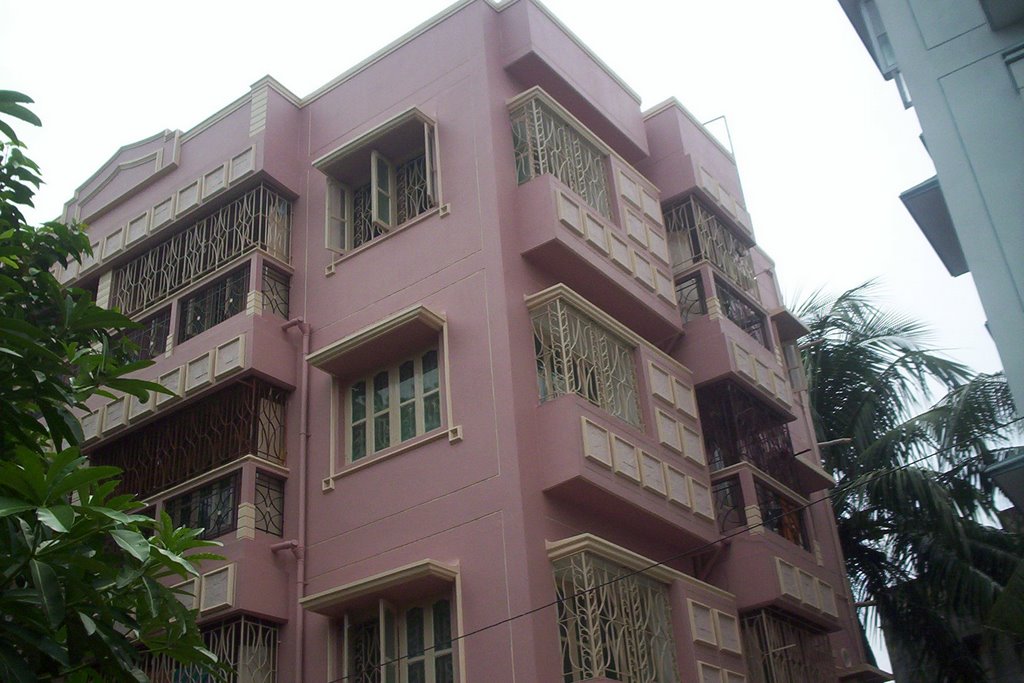
The tiny Residential building project , where safety is the prime concern !
Holy Construction at Kolkata .


Have any Question to Ask ?

More photos of damaged structure !


This amount of damage in a column may cause a collapse of the structure . This is another column at Nagerbazar Bus stand , Beside South Dum Dum Municipality . Nobody still haven't taken a step to repair the damage . Ironically , the Chairman of SDDM has been informed several times !

More Details

A DAMAGED STRUCTURE MAY CAUSE HARM TO PEOPLE !

Dangerous condition of Nager bazar Bus terminus :


Situation :- One of the column of Nagerbazar ( Dum Dum ) bus terminus has become dangerous and may collapse any day ! Anybody can imagine , what could happen if a mishap occurs in such a crowded place like Nager bazar bus terminus !


Action Reqd :- Immidiate repairing should be done to save lives of innocent people .


How to :- I considered the damage very dangerous as I found there are many deep cracks in it caused by impact of the Buses .
Non-shrink granular concrete jacket-ing will be an effective solution ( in one line ) .


Surprised :- I have really surprised that nobody didn't informed nearby Municipal office about this in spite of seeing this danger everyday !

TECHNOLOGY MADE SIMPLE - CONCRETE FROM WASTE MATERIAL !

IT IS POSSIBLE !


It is possible to make concrete using agro , urban , and industrial waste materials .The economy depends on the cost of handling,processing and transportation .The stability and durability of the products developed with waste material over the expected life span is of utmost importance , mainly in relation to building and structural application .


ORGANIC WASTE


The waste material included in this catagory are of plant origin - sawdust,coconut pith rice husk and others . Natural organic waste materials are used to make light weight concrete , before using on a large scale as constituen in concrete for building and other construction , careful design for the structural properties and durability need to be carried out .


URBAN WASTE or INORGANIC WASTE


Huge quantities of building rubble becomes available each year durin the demolishion of old structure to make new one due to rapid urbanisation . Usually broken concrete , broken bricks and crushed glass used to produce concrete of requisite strength and durability . Dumping of these materials causes pollution of environment .

The broken rubble is recycled i.e. the process of removal of durt,reinforcement,plaster or gypsum from thm the old crushed concrete. Broken concrete and broken bricks recycled concrete is suitable for base or sub-base for pavements , and it reduces the construction cost by 30 %. These can be designed to obtain the required strength to use in foundation,flooring and walkways in a light building .

INDUSTRIAL WASTE


Some of the industrial by-product wastes can be profitably used in the concrete construction industry . Some of the by-products are Blast furnace Slag , Coal Ash, Red Mud Aggregate ( by-product from the production of alumina from bauxite ) , Silica-fume . All these wastes used to make cement ultimately reduces cost of concrete .

REPAIR TECHNOLOGY FOR THE COMMON CRACKS IN CONCRETE :LIMITED TO BUILDING CONSTRUCTION ONLY .

THE FOLLOWING ARE THE DEFECTS OCCURS DURING CONSTRUCTION :

1. Cracks in horizontal surface , such as roof - Seal by brushing in cement or low viscosity polymer.
2.Blowholes in form surfaces - Fill with polymer modified fine mortar .
3. Voids in concrete - Cut loose things out and recast .
4. Cracks in thick sections occurring as concrete cools - Seal cracks.
5.Erosion of vertical surface , streaky pattern - Rub with polymer modified fine mortar.
6.Lack of cover to reinforcement - Apply protective coating with polymer modified cement sand mortar .

CRACKS IN CONCRETE !

Concrete is though a relatively durable material , it suffer from damage and/or distress throughout it's life . Distress in structure caused by external and environmental loads exceeding the design stipulations, accidents etc. Poor construction practices error in design, error in detailing, and additional imposed load on structure . All of these results into development of cracks .Most generalised causes are drying shrinkage, thermal stress, weathering,chemical reaction,and corrosion in reinforcement due to penetration of water , cracks due to settlement .

In addition to these blow holes and honeycombing occurs during concreting mainly due to improper formwork and inadequate compaction or loss of grout(cement slurry) through gaps in formwork.

Next post will contain general methods of common cracks in building .

Directory of Real Estate Blogs Real Estate blogs Top Blogs World Top Blogs - Blog TopSites Real Estate Blogs - Blog Catalog Blog Directory Blog Carnival Index - browse the archives Real Estate Blogs - Blog Top Sites Blogarama - The Blog Directory blog rating and reviews blog directory